
Last week, a friend didn’t text me back for six hours. Logically, I knew they were busy. They have a job, a life, and a commute. But emotionally, I was seven years old again. I was convinced I had been forgotten or that I was in trouble.
I wasn’t reacting to the present moment. I was reacting to an old memory.
We like to think we are rational adults making fresh decisions based on the data in front of us. In reality, we often navigate our modern relationships using a blueprint drawn when we were children.
I realized I have been asking myself the wrong question. I thought I was the architect of my reactions. But in moments of stress, the person holding the pen isn’t the adult version of me. It is the version of me that was just trying to survive middle school.
The Blueprints We Built to Survive
Psychologists call this Attachment Theory. It suggests that our early experiences with caregivers create “internal working models” for how relationships work. I prefer to think of them as architectural styles.
We didn’t build these structures because we were broken. We built them because we needed to survive.
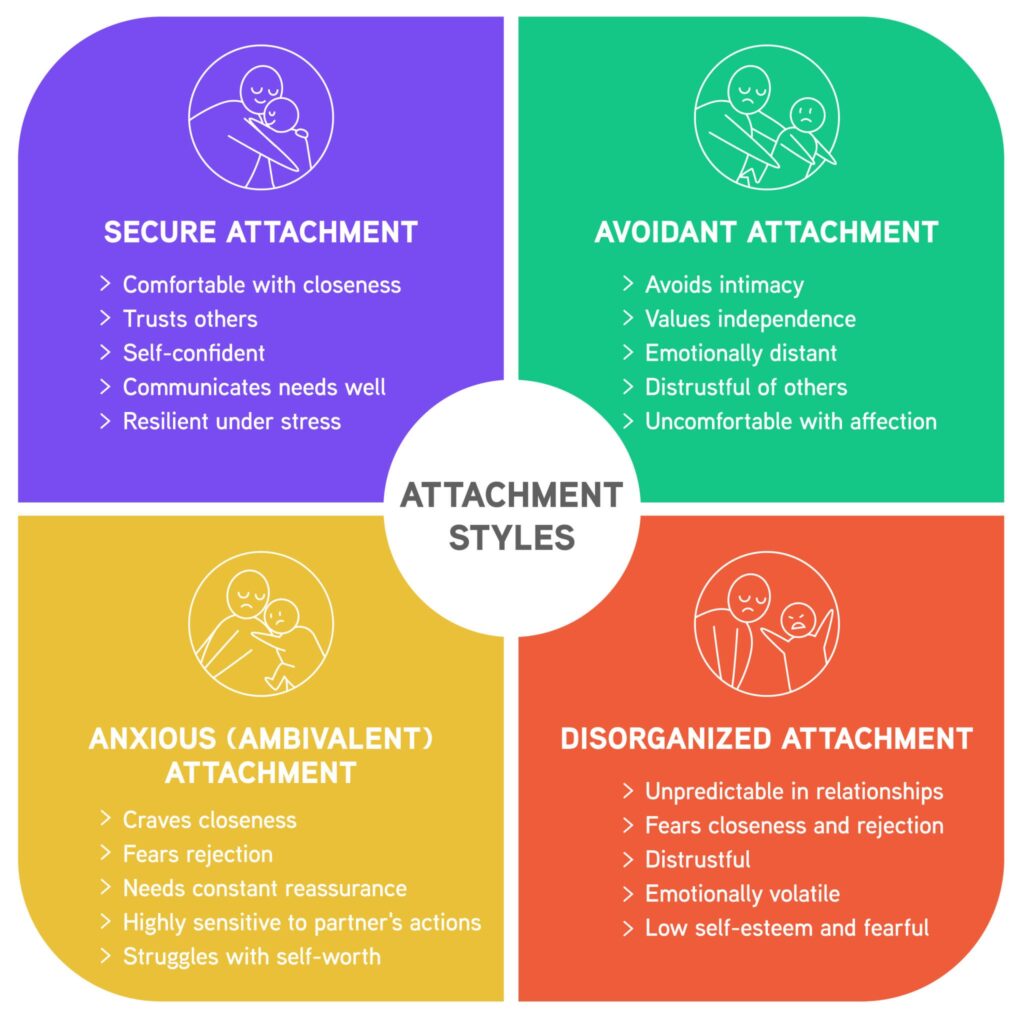
The Fortress (Avoidant Attachment)
For some of us, early vulnerability was met with rejection or indifference. So, we built a Fortress. The blueprint here says that people are unreliable or dangerous. The only way to be safe is to build thick walls, rely only on yourself, and keep the drawbridge up. If you live in the Fortress, intimacy feels like a loss of independence.
The Radar (Anxious Attachment)
For others, affection was inconsistent. Sometimes it was there, sometimes it wasn’t. To stay safe, we built a Radar system. We constantly scan the environment for tiny shifts in mood or tone. The blueprint says that people might leave at any moment, so we must grip tight to keep them close.
The Open House (Secure Attachment)
This is the goal. The Open House has doors that lock to keep bad things out, but it also has windows that open to let good things in. The blueprint says that people are generally good and that conflict is solvable.
The House of Trapdoors (Disorganized Attachment)
This is the most painful blueprint to live in. It often stems from environments where the caregiver was a source of fear, not just inconsistency. The blueprint is a paradox. It says, “I need you to survive, but you are the threat.” If you live here, you want love desperately, but the moment it gets close, your alarm system screams danger. You pull people in, then push them away. It is exhausting because the safety switch is broken.
The problem isn’t that we built a Fortress or a Radar system. Those were brilliant adaptations for the environments we grew up in. The problem is that we are still using a bunker blueprint for a life that is no longer a war zone.
When the Blueprint Doesn’t Match the Land
The friction in our lives usually happens when we try to force an old map onto new terrain.
I see this in my own life constantly. Let’s say my partner is quiet during dinner. The reality of the terrain is simple: they are tired from work. That is safe terrain.
But my blueprint reads the silence differently. My internal code says “Quiet equals Anger.”
Suddenly, my heart races. My stomach drops. My body enters fight or flight mode. I might attack (The Radar) and demand to know what’s wrong, or I might withdraw (The Fortress) to protect myself from the rejection I think is coming.
I am essentially hallucinating a fight. I am reacting to a ghost in the living room, creating a conflict that didn’t need to happen, all because my body is lying to me about the danger level.
The “Pause and Inspect” Protocol
We cannot tear down the house overnight. These structures have stood for decades. But we can start to inspect the foundation.
When I feel a sudden spike of distrust, anxiety, or the urge to shut down this week, I am trying a new protocol. I pause and ask myself one question:
“Is this reaction about who is in front of me? Or is it about who used to be in front of me?”
This is the Redraft. It is the conscious act of choosing a response that fits the present data, not the past trauma.
I tell myself: “I am safe. They are just busy. I will wait.”
The Renovation
I am challenging myself to identify one “cracked tile” in my trust architecture this week. Maybe it is the need to double text when I feel insecure. Maybe it is the refusal to ask for help when I am overwhelmed.
I am going to try to do the opposite of my instinct, just once.
We cannot change the blueprints we were handed as children. We had no say in that construction. But we are the only ones who can hold the pen for the renovation.








You must be logged in to post a comment Login